.svg)
Climate adaptation of Norway spruce: Integrating microclimate data, soil moisture maps, and trial structure to understand drought effects on productivity of genetic F1 trials in southern and central Sweden
Grankloner som bibehåller god tillväxt och överlevnad under torka ska identifieras. Klonerna ska sedan användas vidare i skogsträdsförädlingen och i produktionen av skogsodlingsmaterial. Projektet är ett samarbete mellan Skogforsk och Sveriges lantbruksuniversitet.
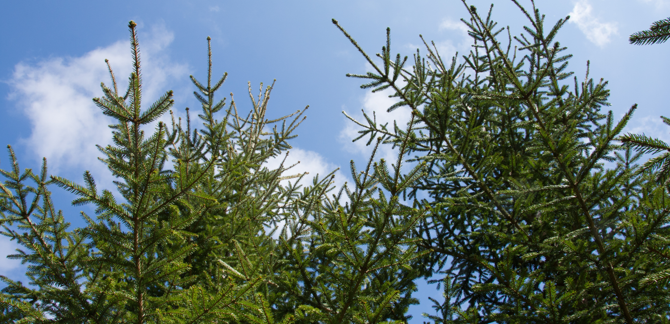
Gran i Lettland. Fotograf; Ulrika Lagerlöf
Climate change is increasing the frequency and severity of droughts in northern Europe, posing a growing challenge for forests and forestry. Norway spruce is one of the most important tree species in Sweden, both economically and ecologically, but it is also highly sensitive to drought. Recent extreme events, such as the severe drought in 2018, have shown how water stress can reduce growth, weaken trees, and increase their vulnerability to pests such as the spruce bark beetle. To ensure productive and resilient forests in the future, it is essential to understand how Norway spruce responds to drought and to identify genetic material that performs well under dry conditions.
This project aims to improve our understanding of drought effects on Norway spruce by combining several unique data sources. We will analyse long-term growth and survival data from genetic field trials across southern and central Sweden together with detailed information on local microclimate, soil moisture conditions, and drought intensity. By integrating temperature measurements from field-based sensors, high-resolution soil moisture maps, and climate-based drought indices, we can better capture the actual conditions experienced by trees at each site.
A key focus is to identify spruce clones that maintain good growth and survival during drought. These drought-tolerant genotypes can be used in breeding programs and seed orchards to produce planting material better adapted to future climates. The results will support climate-adapted forest management and help safeguard the productivity, stability, and carbon storage capacity of Sweden’s forests under increasing drought risk.
Ämne: Klimatanpassat & hållbart skogsbruk
Startår: 2026
Dela
Det här projektet vill bidra till följande globala hållbarhetsmål:

Andreas Helmersson
Skoglig doktor- Organisation Skogforsk
- Telefon 0709372807
- Epostadress andreas.helmersson@skogforsk.se
Vi bidrar till utveckling
Skogssällskapet är en av Sveriges största privata finansiärer av forskning och kunskapsutveckling om skog och naturvård.
Vill du prenumerera...
...på vårt nyhetsbrev?
Fyll i din e-postadress här. Nyhetsbrevet innehåller tips och ny kunskap och skickas ut en gång i månaden.
...på Tidningen Skogsvärden?
Fyll i dina uppgifter här. Tidningen skickas därefter kostnadsfritt hem till dig fyra gånger per år.